COME HOLY SPIRIT
The Holy Spirit breathes life into the Church, anointing messengers, healing wounds, and renewing every vocation. From saints who served the poor to priests strengthened for lifelong ministry, the Spirit continues to empower God’s people. Here we reflect on that gracious divine power at work in our lives and in our mission.
A Reflection on the Ascension of the Lord and the Birth of the Church
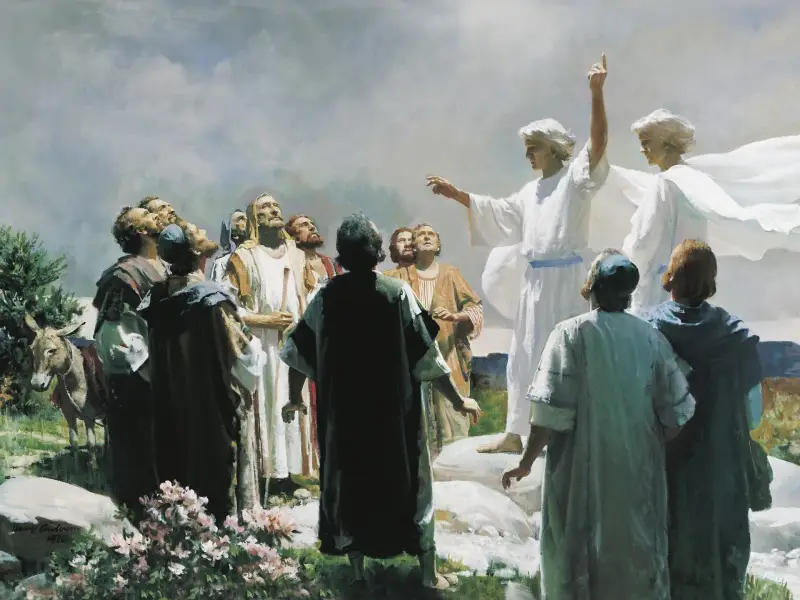
The Ascension is not the end of Jesus’ earthly ministry — it continues — in the beginning of the Church’s mission. As the disciples stand gazing upward, two heavenly figures ask:
“Why are you Galileans looking up to the sky?”
Their question is gentle but firm. It is as though they are saying: Do not remain frozen in wonder. The Lord has gone ahead of you — now begin the work He has entrusted to you.
The disciples remember His final instructions: return to the city and wait for “the promise of the Father,” the power of the Holy Spirit. Obediently they gather in the upper room, united in prayer. There they discern their first task as the apostolic Church — to restore the Twelve by choosing Matthias to take the place of Judas.
This moment of prayerful decision becomes the Church’s first act of Spirit‑guided governance.
The Ascension and the Great Commission form a single movement: Christ returns to the Father, and the Church receives her mission.
The Gospel accounts each capture this moment from a different angle, Matthew 28:16–20, Mark 16:14–18, Luke 24:36–49, John 20:19–23, while Acts 1:6–8 shows the transition from Jesus’ earthly presence to the Holy Spirit’s empowering presence.
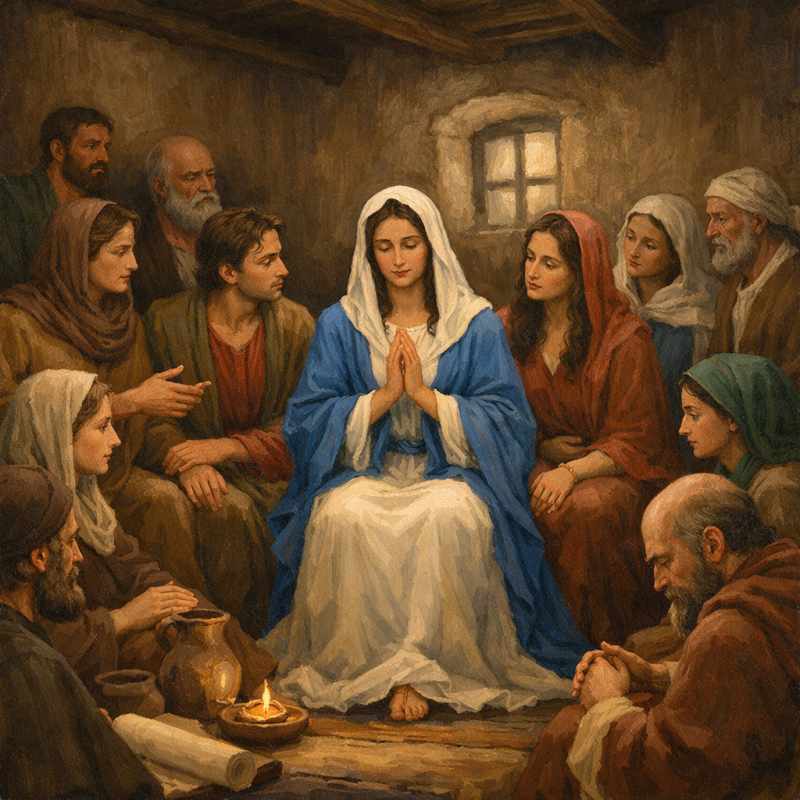
Mary and the Women in the Upper Room — The Church Waiting to Be Born
As the apostles return from the Mount of Olives, they do not gather alone. Acts 1:14 tells us:
“All these were constantly devoting themselves to prayer, together with some women, including Mary the mother of Jesus.”
Mary, who once awaited the overshadowing of the Holy Spirit at the Annunciation, now waits again — but this time with the Church. The same Spirit who formed Christ in her womb will now form Christ’s Body in the world.
The women who followed Jesus — those who stood at the Cross, who discovered the empty tomb, who first proclaimed the Resurrection — are also there. Their fidelity becomes part of the Church’s foundation.
Before any preaching, before any councils, before any missionary journeys, the Church begins in prayerful communion, men and women together, gathered around Mary, awaiting the Holy Spirit.
This is the Church’s first “tradition”: not a text, not a structure, but a living community.
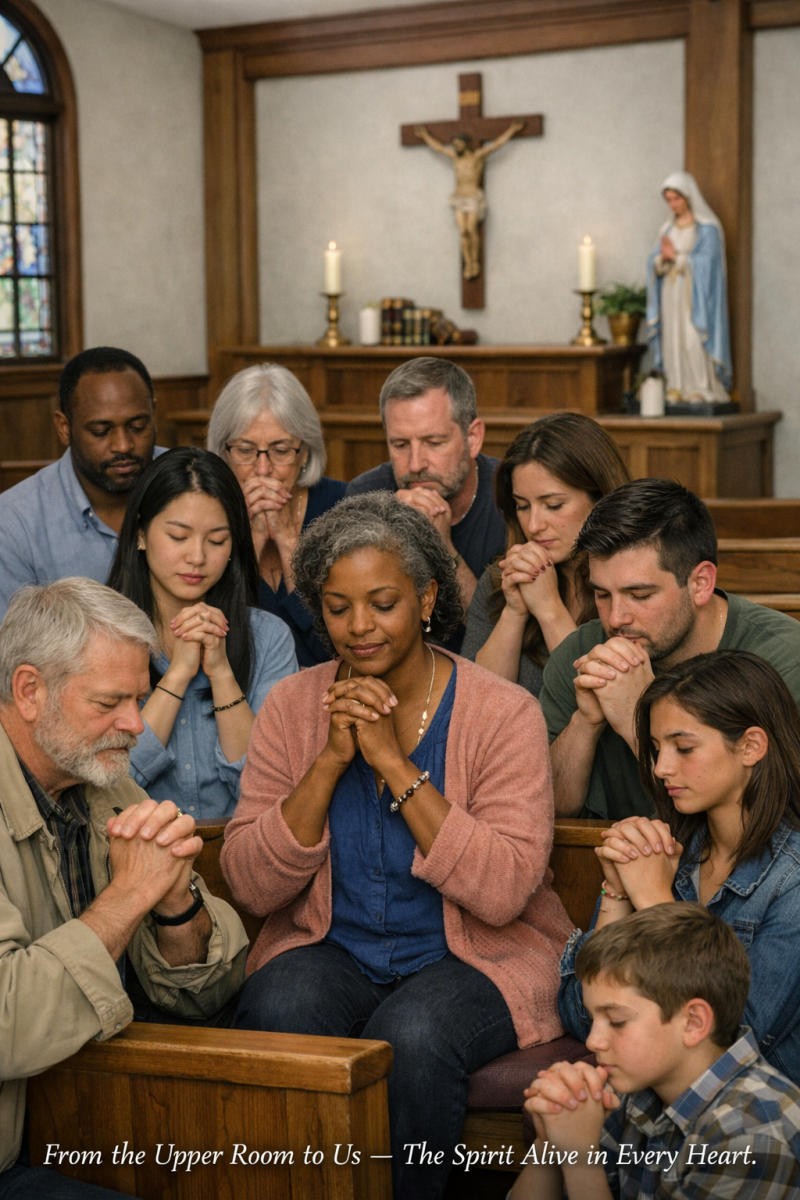
From the Upper Room to the Catholic Church Today
What happened in that room is not simply history. It is the pattern of the Church’s life in every age.
The Upper Room teaches the Church today
- Mary’s presence shows that the Church is Marian before she is apostolic — receptive before active.
- The choice of Matthias reveals that authority is exercised in prayer, unity, and dependence on God.
- Waiting for the Holy Spirit teaches that no mission succeeds without divine power.
- Men and women together remind us that the Church is communal, not individualistic
This is the heart of Catholic tradition. The same Spirit who descended at Pentecost continues to guide, sanctify, and animate the Church through Scripture, sacrament, apostolic succession, and the lived faith of saints. What began in the Upper Room continues in the hearts of the people of the Church today.
The Holy Spirit comes to us where we are — in the Upper Room then, in our everyday lives now. We are called to gather, pray, discern, and step forward in the power of the Holy Spirit.
A Marian Reflection
Mary stands quietly at the centre of the Upper Room — not as a leader giving instructions, but as a mother gathering her children. She has already lived what the apostles are only beginning to understand.
She knows how to wait for the Holy Spirit. She knows how to surrender to God’s plan. She knows how to let Christ be formed within her.
At the Annunciation, she received the Spirit for the sake of Christ’s birth. At Pentecost, she receives the Spirit for the sake of the Church’s birth.
Her presence is formative. She teaches the apostles how to wait, how to pray, how to trust. Her faith steadies their uncertainty. Her memory of Jesus anchors their hope. Her prayer becomes the quiet heartbeat of the Church’s first days.
In Mary, the Church learns how to be Church — not by strategy, but by surrender; not by power, but by prayer; not by fear, but by trust in the Spirit who comes.
The Church waits — gathered with Mary, rooted in prayer, holding fast to the promise of Christ. The Ascension does not leave the disciples abandoned; it prepares them to receive a new kind of presence, deeper and more interior than anything they have known.
What began with Mary at Nazareth now unfolds with Mary at the heart of the Church. The same Spirit who overshadowed her is about to overshadow them.
The moment of fulfilment draws near. Soon the wind will rise, the fire will descend, and the mission of Christ will burst forth into the world.
Pentecost is coming — and with it, the Church is born.
The Gifts of the Holy Spirit
On this Pentecost, we pause before the Spirit’s fire and open our hearts to His gifts.
“Holy Spirit, kindle in us the fire of Your love.”
Wisdom
Wisdom is the quiet fire of Pentecost — the Spirit lifting our vision so that we see life not through fear or confusion, but through God’s loving gaze.
Understanding
Understanding is the Spirit whispering, “Look again.” It deepens our faith so that what once seemed distant becomes luminous and alive.
Counsel
Counsel is Pentecost in daily life — the Spirit shaping our decisions, prompting us toward mercy, truth, and courage.
Fortitude
Fortitude is the fire of Pentecost made steady — the Spirit giving us the strength to remain faithful, to speak truth, and to love without fear.
Knowledge
Knowledge is the Spirit clearing our vision so that we neither cling to the world nor despise it but receive it with gratitude and freedom.
Piety
Piety is the Spirit softening the heart — giving us a childlike openness that delights in prayer, worship, and compassion.
Fear of the Lord
Fear of the Lord is the Spirit opening our hearts to God’s holiness — a reverence that leads not to shrinking back, but to drawing near.
Aspiration and Prayer
These seven gifts flow from the Upper Room into every age of the Church. The same Spirit who descended upon Mary and the Disciples desires to shape our minds, steady our hearts, and kindle our love.
Come, Holy Spirit — kindle these gifts within us and renew Your Church in love.